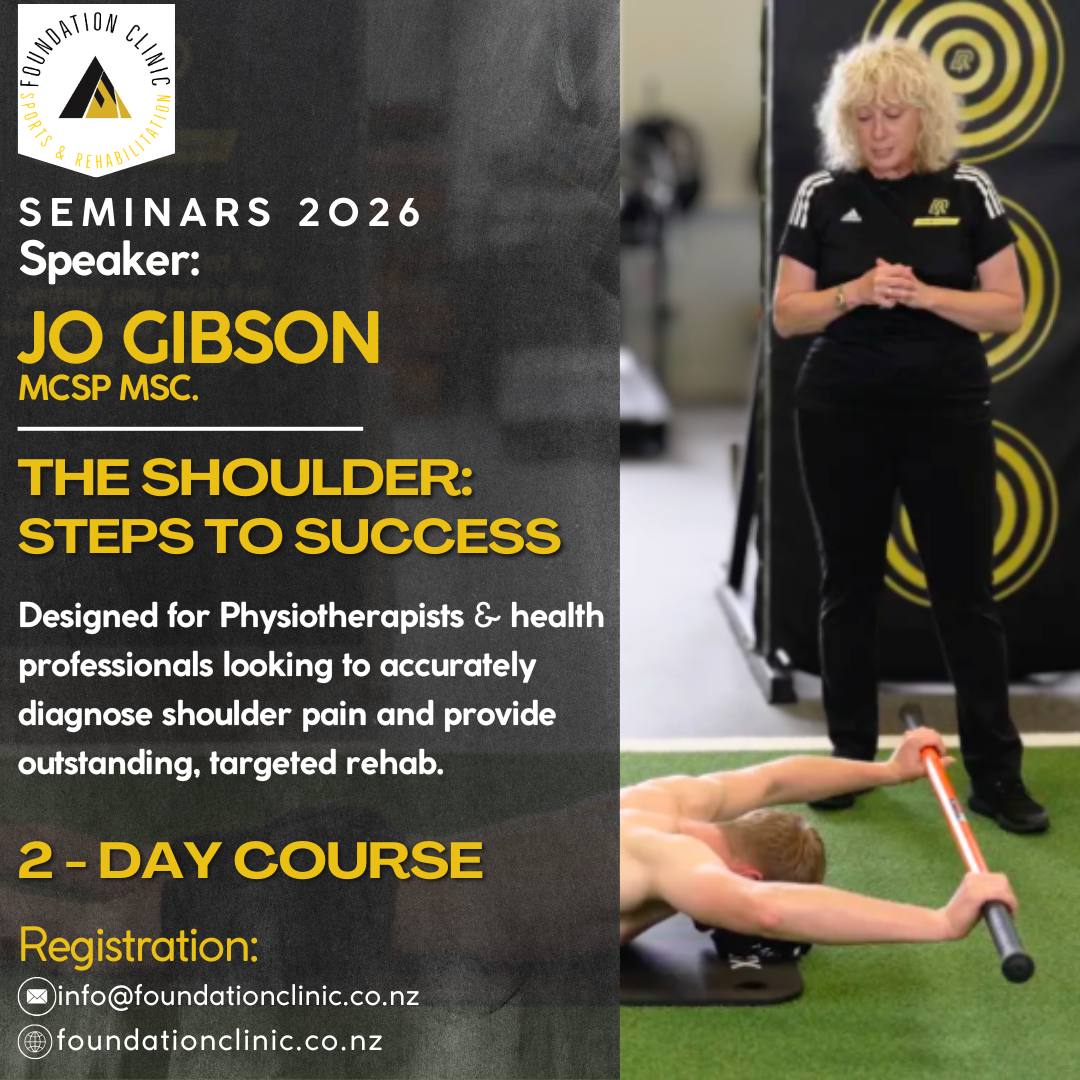
Jo’s 2-day course has been delivered all over the world and has successfully empowered thousands of clinicians in their management of people with shoulder pain or injury. The course is designed to equip participants with a simple clinical reasoning framework that helps inform the assessment and management of individuals with shoulder problems. It is designed for clinicians to help translate evidence into meaningful practice and is packed with clinical content. The course is constantly updated to reflect emerging evidence and how it impacts practice but essentially reflects the approach Jo uses every day in her clinical practice to the benefit of patients. The course is designed to be honest, fun and interactive and includes plenty of treatment tips and real-life examples to ensure the course content is immediately transferable into practice.
gg
Tutor: Jo Gibson MSc MCSP
Jo Gibson worked as a Clinical Specialist Physiotherapist in the Liverpool Upper Limb Unit for 28 years and has been teaching her shoulder course for over 27 years. During her career she has travelled all over the UK, Europe and the rest of the world to work with and observe some of the World's leading shoulder experts. Jo now works as a Consultant UL Rehabilitation Specialist at Shoulder Success in Liverpool, UK and as an Honorary Senior Research Fellow at Liverpool Hope University.
Her involvement in original research, study at Masters level and vast experience of treating patients with shoulder problems has enabled her to develop a simple, evidence-informed approach to rehabilitation of the shoulder that is immediately applicable in practice.
gg
Learning Objectives
- Review factors impacting outcome in people with shoulder problems and what it means to management.
- To examine the current understanding regarding muscle function in the shoulder complex and how it informs an approach to assessment that guides treatment.
- To examine the role and relevance of the kinetic chain in shoulder pain and performance and the potential it offers to facilitate shoulder rehabilitation.
- To demonstrate a simple structured clinical reasoning framework that highlights where to start with treatment and management options.
- To explore simple treatment approaches based on the current evidence to successfully manage patients with common shoulder conditions within a biopsychosocial framework.
- To examine factors impacting pain sensitivity and tissue health and how this informs management.
- To explore the role of the cervical spine in shoulder pain presentations, key aspects of differential diagnosis and effective management strategies.
- To examine when structural pathology may be relevant and how its presence may impact decision making and treatment approaches.
- To understand causes of shoulder stiffness and how this understanding underpins approaches to management.
- To explore the role of strengthening and specific performance parameters in ensuring individuals are fit for function and opportunities provided by the evidence base.
- To discuss factors that influence outcome and enhance exercise adherence and explore strategies to address them.
- To consider the importance of communication and language on patient’s pain experience
gg
Programme:
| Day 1: |
|
| 9:00am |
The current state of play in shoulder pain: What really matters? Understanding the evidence and what it means for treatment
|
| 10:30am |
Break |
| 10:50am |
The Rotator Cuff & the Scapula: Victims & culprits. Opportunities and insights -using assessment to inform treatment
|
| 12:20pm |
Lunch |
| 1:20pm |
The Kinetic Chain: Pain, performance and rehabilitation considerations. Making life easier for the shoulder and when to consider pain presentations
|
| 2.10pm |
Is it Torn & Does It Matter? Is structural pathology ever relevant and how does it impact management?
|
| 3.00pm |
Break |
| 3.20pm |
Is it Stiff? Causes of shoulder stiffness and options for treatment (including post-op stiffness, frozen shoulder, osteoarthritis and ACJ stiffness)
|
| 4.30pm |
Finish |
| Day 2: |
|
| 9.00am |
The Irritable shoulder: Does pathology matter? Key causes & considerations in patients with high pain irritability & what we can do about it
|
| 10:30am |
Break |
| 10:50am |
The Irritable shoulder: Does pathology matter? Part 2 Treatment options & getting it right from the start
|
| 12:20am |
Lunch |
| 1.20pm |
Fit for function? Problems and progressions. Debates, controversies and getting exercise done. Including the unstable shoulder- is it any different?
|
| 3pm |
Break |
| 3.20pm |
Communication is your superpower: Use it wisely. Fundamentals – don’t be a nocebo! Setting people up for success.
|
| 4.30pm |
Finish |