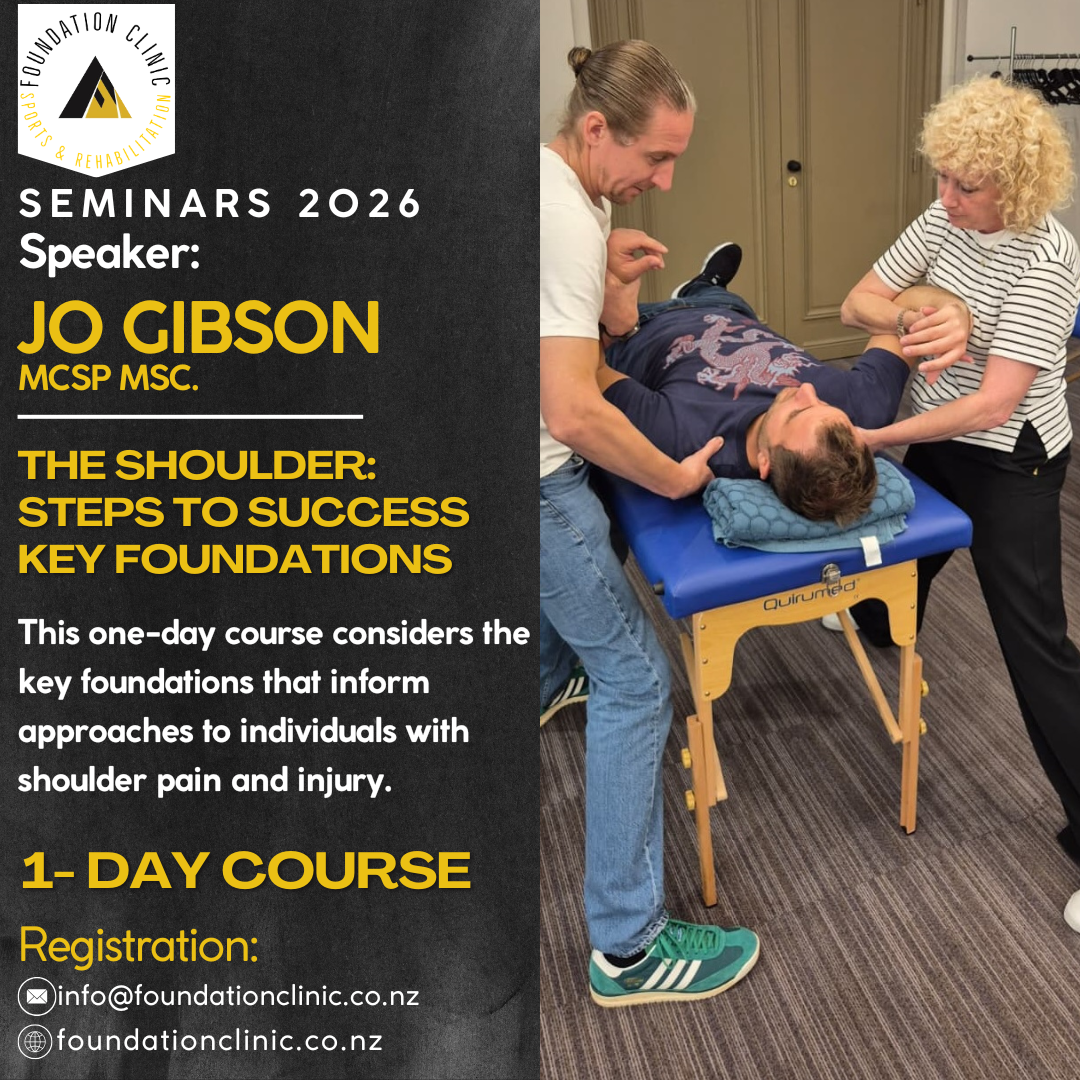
This one-day course considers the key foundations that inform approaches to individuals with shoulder pain and injury. It reflects the factors impacting outcome and how we can address these together with introducing a simple clinical reasoning framework that informs where to start with treatment. Having considered the key foundations of effective treatment it will also examine highly irritable shoulder pain presentations and effective strategies we can employ to get patients back on track.
gg
The Tutor
Jo Gibson worked as a Clinical Specialist Physiotherapist in the Liverpool Upper Limb Unit for 28 years and has been teaching her shoulder course for over 26 years. During her career she has travelled all over the UK, Europe and the rest of the world to work with and observe some of the World's leading shoulder experts. Jo now works as a Consultant UL Rehabilitation Specialist at Shoulder Success in Liverpool, UK and as an Honorary Senior Research Fellow at Liverpool Hope University.
Her involvement in original research, study at Masters level and vast experience of treating patients with shoulder problems has enabled her to develop a simple, evidence-informed approach to rehabilitation of the shoulder that is immediately applicable in practice.
Jo’s courses are constantly updated to reflect emerging evidence and how it impacts practice but they essentially reflect the approach Jo uses every day in her clinical practice to the benefit of patients. Courses are designed to be honest, fun and interactive and include plenty of treatment tips and real-life examples to ensure that course content is immediately transferable into practice.
gg
Learning Outcomes:
- Review the challenges posed by the current evidence regarding assessment and management of patients with shoulder pain and what really matters in management.
- To examine the current understanding regarding muscle function in the shoulder complex and how it informs an approach to assessment that guides treatment.
- To examine the role and relevance of the kinetic chain in shoulder pain and performance and the potential it offers to facilitate shoulder rehabilitation.
- To demonstrate a simple structured clinical reasoning framework that highlights where to start with treatment and management options.
- To explore simple treatment approaches based on the current evidence to successfully manage patients with common shoulder conditions within a biopsychosocial framework.
- To examine factors impacting pain sensitivity and tissue health and how this informs management.
- To consider the importance of communication and language on patient’s pain experience
cc
Programme:
| 9.00am |
The current state of play in shoulder pain: What really matters?
Understanding the evidence and what it means for treatment
|
| 10.30am |
Break |
| 10.50am |
The rotator cuff and scapula: Victims & culprits.
Opportunities and insights -using assessment to inform treatment
|
| 12.20pm |
Lunch |
| 1.20pm |
The Kinetic chain: Pain, performance and rehabilitation considerations
Making life easier for the shoulder and when to consider in pain presentations
|
| 2.20pm |
Steps to success: Keeping it simple for the shoulder
A clinical reasoning framework to inform where to start with treatment
|
| 2.45pm |
Break |
| 3.05pm |
The Irritable shoulder: Does pathology matter?
Key considerations in patients with high pain irritability & what we can do about it
|
| 4.30pm |
Finish |