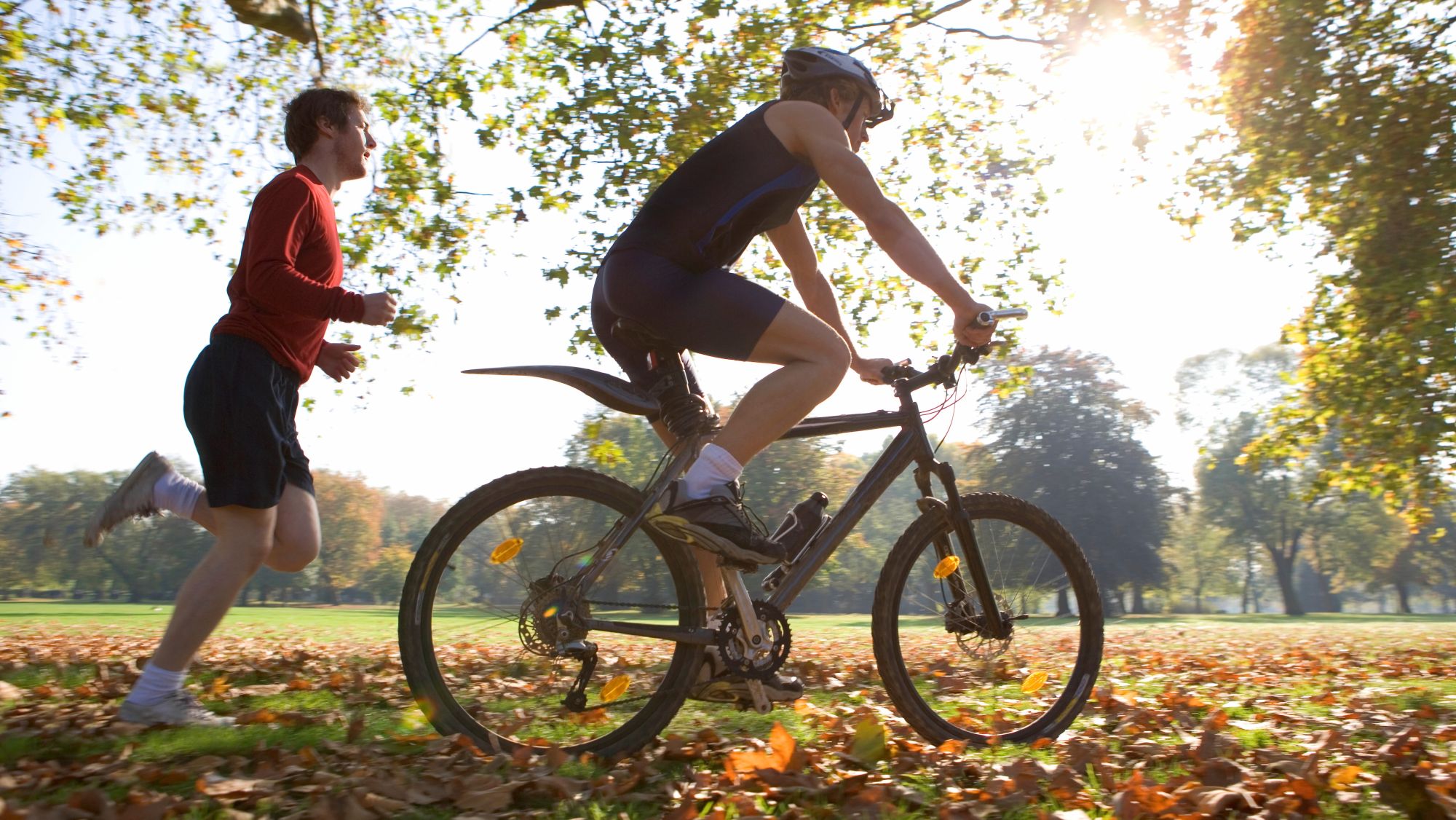
I’ve been in New Zealand for two years now, but my northern hemisphere brain still struggles to process that June = beginning of winter. I’ll be the first to admit that as temperatures drop and daylight hours shorten, my motivation to train outside plummets.
It has been well documented that colder weather and darker mornings with increased time indoors can all contribute to decreased physical activity levels. However, maintaining regular exercise throughout winter is one of the most important ways to support your physical health, mental wellbeing, and long-term function. Not to mention coffee/pastries are far better in the cold than the heat.
For us as physiotherapists, winter presents an important opportunity to educate our community on safe and sustainable movement strategies. We want to show you how you can reduce injury risk while preserving all your hard-won strength and cardio progress gained during the summer.
hh
Why You Don’t Want to Exercise in the Winter
Because its cold, dark, wet and an extra hour in bed is far more appealing to be honest. When you’re struggling to get the motivation at times like these, you are literally fighting against your inner caveperson and thousands of years of evolution that are telling you that “cold outside = food is scarce = must conserve energy”
Which is understandable, lessons that kept us alive thousands of years ago are not so easily forgotten. Our base operating systems (CaveBrain 1.0) still doesn’t fully register that calories and energy are now plentiful, and we don’t need to worry. I suppose the first step in overcoming the urge to hibernate is to get your feet out of bed and realise that you’re not going to immediately die of hunger (a daily struggle for me and my dog).
hh
The Physiological Effects of Cold Weather
Without getting into the weeds around metabolism, thermodynamics and general science-speak, it is important to understand that cold environments influence how the body performs during exercise. One of the most important considerations is your warm-up.
The research shows that reduced muscle temperature may impair force production, reaction time, power output, and flexibility. Connective tissues can also become less pliable in colder conditions, potentially increasing injury risk if exercise intensity increases too quickly (Daanen, H. A. M., et al. (2021).
What does this mean? Almost all the mechanisms by which your muscles and joints work is negatively affected by the cold.
hh
A Practical Guide to the Warm-up
This is why warm-ups become especially important during winter. A longer dynamic warm-up helps increase muscle temperature, enhance joint mobility and prepare the cardiovascular system for activity (Castellani, J. W., & Young, A. J. 2012)
My big take away here is that gradually progressing intensity rather than starting exercise abruptly is the key to training in cold conditions. You want to structure your warm-up so that its effective and easily repeatable. The last thing you want to do when you’re cold and tired is to be half-remembering the sequence you made up last time.
Break it down into two phases over 10-15 minutes:
General activation – light jogging, calf raises, arm circles, neck rolls etc. Think moving from small to big, the objective is to steadily increase your heart rate and body temperature.
Specific mobilisation – Squatting, lunging, low back flexion/rotation etc. Now you’re looking at whatever movements your training demands. We’ve got our heart rate elevated and temperature up – we can start moving into more range as our muscles can now safely tolerate the increased loading.
It doesn’t particularly matter where you start but make sure it’s the same every time (start with feet > end with shoulders or vice versa). If you then notice during your session that something feels tight or overworked during your session, it means you can add extra activation/mobility to address that. Speak to your physio about your individual requirements, we’ve got plenty of ideas to share.
hh
Final Thoughts
I have definitely acclimatised to living here. Back home, if the temperature is above 6 degrees it is considered warm enough to wear shorts. As we move through autumn into winter, remember to check in with your inner caveperson and reassure them that winter does not need to mean that we hibernate in bed (they have cinnamon scrolls outside the cave).
With appropriate preparation (a longer, more structured warm-up), you can continue training safely and effectively throughout colder months. If you have any questions, please reach out to us at Foundation.
As Jo Gibson has highlighted in her work with rotator cuff-related shoulder problems, a key question is not simply “Is it torn?”, but “Does the tear matter?”