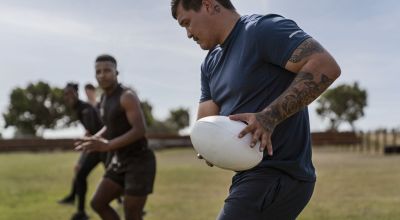
As hockey, football, netball, rugby, and rugby league seasons hit full stride, we start to see a familiar trend at Foundation Clinic: athletes trying to push through injuries that would have been much easier to manage if they were addressed earlier.
Most injuries don't happen all at once. While some are the result of a specific tackle, collision, or awkward landing, many begin as a small niggle that gradually worsens over weeks.
A sore calf after hockey training. A stiff ankle following netball. A shoulder that's not quite right after a rugby game. A hamstring that keeps tightening during sprint efforts.
Athletes often continue to push through these symptoms, only seeking help once the problem begins affecting their ability to train, compete, or enjoy their sport.
Why Early Assessment Matters
The earlier an injury is assessed, the more options there are to keep you active while it recovers.
Minor injuries are often easier to manage with targeted exercises, load modification, and appropriate treatment. Left unchecked, however, they can develop into more significant problems that require longer periods of rehabilitation and time away from training and competition.
Many athletes wait until they can no longer run, jump, tackle, or change direction before seeking help. By that stage, the injury has often progressed considerably.
Different Sports, Different Demands
Each winter sport places unique demands on the body.
Rugby and Rugby League: High-speed running, contact, tackling, and repeated impacts can contribute to shoulder injuries, knee injuries, calf strains, hamstring strains, and ankle sprains.
Netball: Rapid acceleration, deceleration, jumping, and landing place significant demands on the knees, ankles, calves, and Achilles tendons.
Hockey: The combination of sprinting, changing direction, and prolonged bent-over positions can contribute to calf and hamstring strains, groin injuries, lower back pain, and overuse injuries.
Football: Football requires repeated sprinting, kicking, sudden changes of direction, and prolonged running. Common injuries include hamstring strains, calf injuries, groin pain, ankle sprains, and knee injuries.
hh
While the injuries may differ, the message remains the same: small issues rarely improve when ignored.
Don't Default to the Sidelines
At Foundation Clinic, our goal isn't to stop you playing, it's to keep you moving and participating wherever it is safe and appropriate to do so.
Many athletes assume that seeking treatment means they'll be told to rest completely. Complete rest is rarely the best solution. More often, we modify training loads, adjust activities, and implement targeted rehabilitation so you can continue to train, compete, and stay involved with your sport while recovering.
Recovery is strongest when it's active. While rest may help settle symptoms in the short term, it doesn't build the strength, capacity, and resilience needed to return to full performance.
The earlier an injury is assessed, the more opportunities there are to keep you active throughout the recovery process. Our aim is to help you stay on the field, court, or turf wherever possible, while reducing the risk of a minor issue becoming a season-ending injury.
If something doesn't feel right, that's usually your sign to act.
Whether you're playing hockey, football, netball, rugby, or rugby league, addressing injuries early can reduce recovery time, improve performance, and help keep you on the field throughout the season.
As Jo Gibson has highlighted in her work with rotator cuff-related shoulder problems, a key question is not simply “Is it torn?”, but “Does the tear matter?”