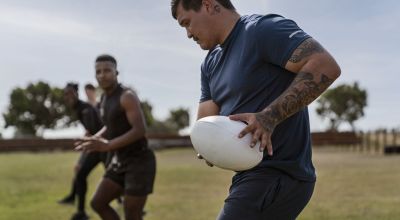
As the weather warms up, summer sports like touch, cricket, tennis, golf and rowing get back into full swing. Whether you’re returning to a regular competition, training for the season ahead or enjoying a social game it’s important to make sure your body is ready for the demands of your sport.
A sudden increase in training, repetitive movements or returning after a break can place extra stress on your body. Without gradually building up your load, small niggles can quickly develop into injuries that keep you out of the game.
hh
Common Summer Sports Injuries
Touch
Touch requires repeated sprinting, acceleration, deceleration and rapid changes of direction. These high-speed movements place significant demands on the muscles and joints, particularly when fatigue sets in. Hamstring and calf strains, groin injuries and ankle sprains are common, especially when players return to competition without building up their running and change of direction capacity. If you’re experiencing tightness or discomfort during or after a game, it’s worth getting it checked before it affects your ability to sprint and change direction confidently.
Cricket
Cricket involves a combination of explosive movements, repetitive throwing, bowling and prolonged periods of activity. Fast bowlers can experience lower back and side strains, while shoulder injuries can develop from repetitive bowling and throwing. Hamstring and calf strains are also common when sprinting between wickets or chasing the ball in the field. Gradually building up bowling volumes, sprinting and throwing intensity can help prepare your body for the demands of the season.
Tennis
The repetitive nature of serving and hitting can contribute to shoulder pain and tennis elbow, while quick movements across the court increase the risk of calf strains and ankle sprains. Players returning after a break may notice symptoms as their hitting volume and match intensity increase. Addressing early discomfort and building strength and movement capacity can help you stay on court throughout the season.
Golf
The repetitive rotational forces involved in the golf swing can place considerable stress on the body. Lower back pain is common, alongside shoulder, elbow and wrist injuries. These symptoms can develop from repetitive practice, changes in swing mechanics or suddenly increasing the number of rounds played. Improving strength, mobility and tolerance to rotational loading can help you manage these demands and enjoy your golf without persistent discomfort.
Rowing
Rowing involves thousands of repetitive strokes, requiring coordinated movement and sustained force through the legs, trunk and upper body. Lower back pain, rib stress injuries and knee pain can occur when training volumes increase too quickly or the body struggles to tolerate the repetitive loading. Changes in training intensity, technique or recovery can also contribute to symptoms. Early assessment can help identify contributing factors and guide adjustments to training, alongside targeted strength work to help you continue rowing safely.
hh
Get on Top of Niggles Early
It’s tempting to push through discomfort and hope it settles on its own, but small niggles can become bigger problems if left unaddressed. Continuing to train or compete without understanding what’s causing your symptoms may lead to longer periods away from the sport you enjoy.
Early physiotherapy can help identify the cause of your symptoms, guide your training load and develop a plan to build strength, mobility and resilience.
At Foundation Clinic, we focus on keeping you moving, training and playing wherever possible, with rehabilitation tailored to your sport and goals.
As Jo Gibson has highlighted in her work with rotator cuff-related shoulder problems, a key question is not simply “Is it torn?”, but “Does the tear matter?”