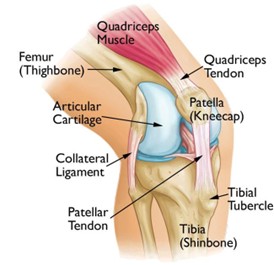
Patellofemoral Pain Syndrome (PFPS) is an umbrella term used for pain arising from the patellofemoral joint itself, or adjacent soft tissues. These soft tissues include the tendons, the fat pad beneath the patella, and the synovial tissue that lines the knee joint.
In many cases, patellofemoral pain syndrome is caused by vigorous physical activities that put repeated stress on the knee —such as jogging, squatting, and climbing stairs. It can also be caused by a sudden change in physical activity. This change can be in the frequency of activity—such as increasing the number of days you exercise each week. It can also be in the duration or intensity of activity—such as running longer distances. PFPS can also be due to patella trauma, muscular weakness, imbalance, or dysfunction.
Symptoms
The most common symptom of patellofemoral pain syndrome is a dull, aching pain in the front of the knee. This pain which usually begins gradually and is frequently activity-related may be present in one or both knees.
Other common symptoms include:
Pain during exercise and activities that repeatedly bend the knee, such as climbing stairs, running, jumping, or squatting.
Pain after sitting for a long period of time with your knees bent, such as one does in a movie theatre or when riding on an airplane.
Pain related to a change in activity level or intensity, playing surface, or equipment.
Popping or crackling sounds in your knee when climbing stairs or when standing up after prolonged sitting.
Treatment
Treatment aims to reduce your pain and inflammation in the short-term and then, more importantly, correct the cause to prevent it from returning in the long-term. Treatment is based on clinical assessment and therefore is individualised for each person. Contributing factors that might be addressed include hip and quadricep strength, musculotendinous compliance, patella taping, and load management.